TANKiT®, Tallow tank leak – Australia
Emergency composite repair solution for tank and pressure vessel reinforcement
Overview
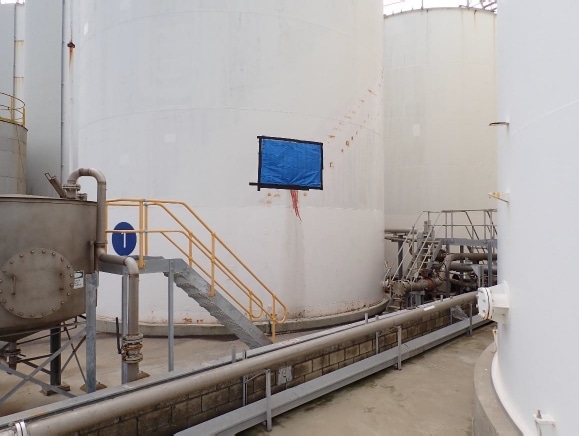
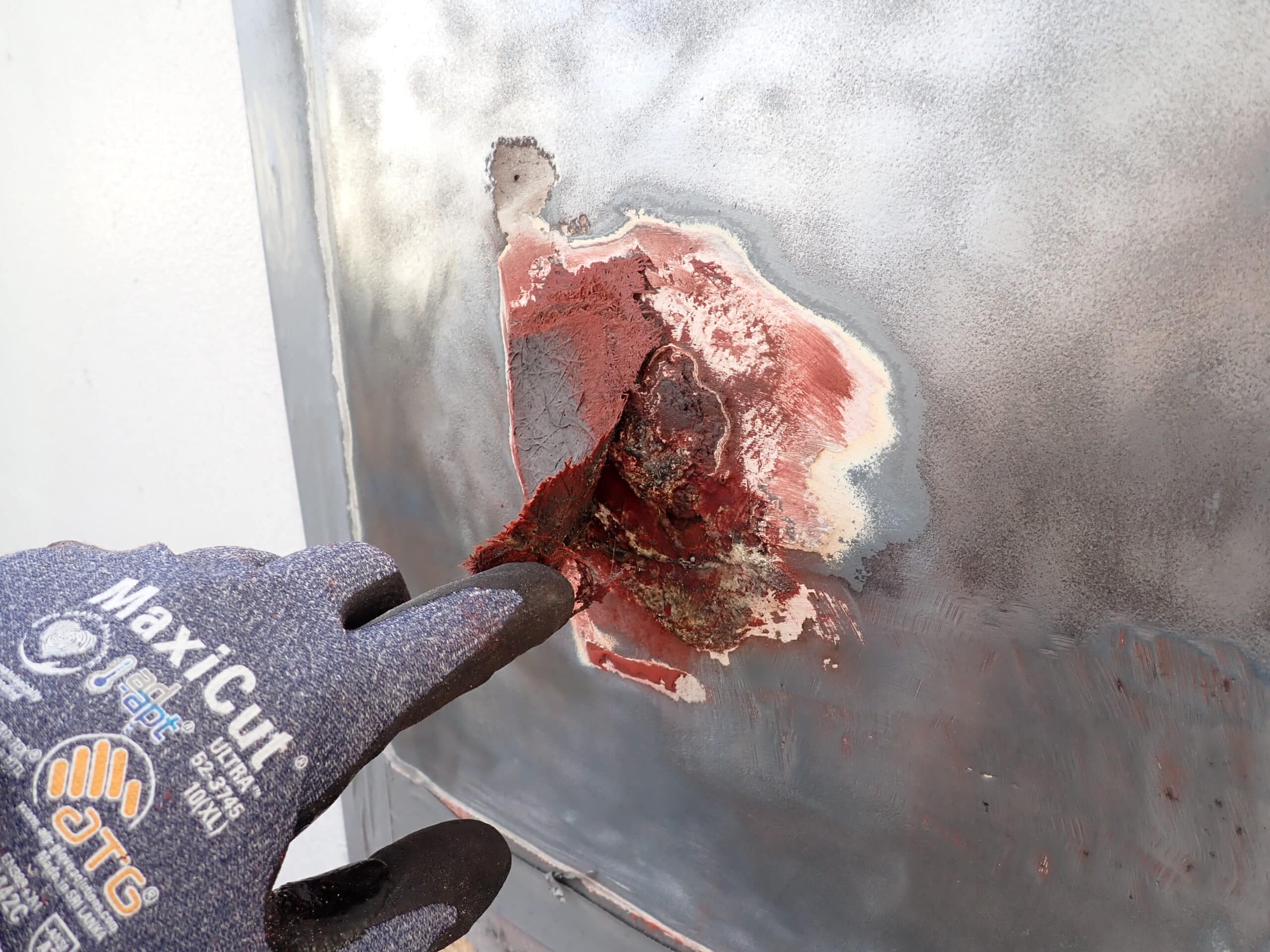
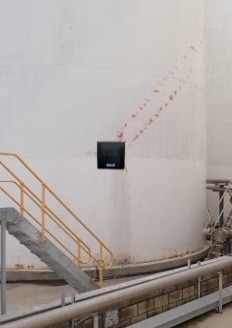
In August 2025, 3X ENGINEERING's (3X) Australian distributor carried out an emergency repair on a tallow tank presenting a leak on its side wall. Following a detailed assessment of the tank and the defect characteristics, the decision was to implement the TANKIT® solution a composite repair system specifically designed for quick and reliable reinforcement of damaged storage tanks.
Results
The composite repair was completed successfully, restoring the tank's integrity with the TANKIT® system. From initial enquiry to execution, 3X distributor was able to deliver the solution on short notice, enabling the client to meet their shipping schedule. The repair is guaranteed for 2 years.
 Defect type |
Side wall tank leak |
Details |
Tallow tank-11m OD x 13m H defect size 15x15mm |
Location |
Australia |
3X Product type |
TANKiT® |
Scope of work
The repair area was first prepared using a Bristle Blaster® machine to remove rust and contaminants, and to achieve the required surface roughness (minimum Rz of 60 µm). Prior to patch application, hygrometric conditions were verified, and the surface was thoroughly cleaned and degreased.
The repair was carried out following the standardized 3X procedure:
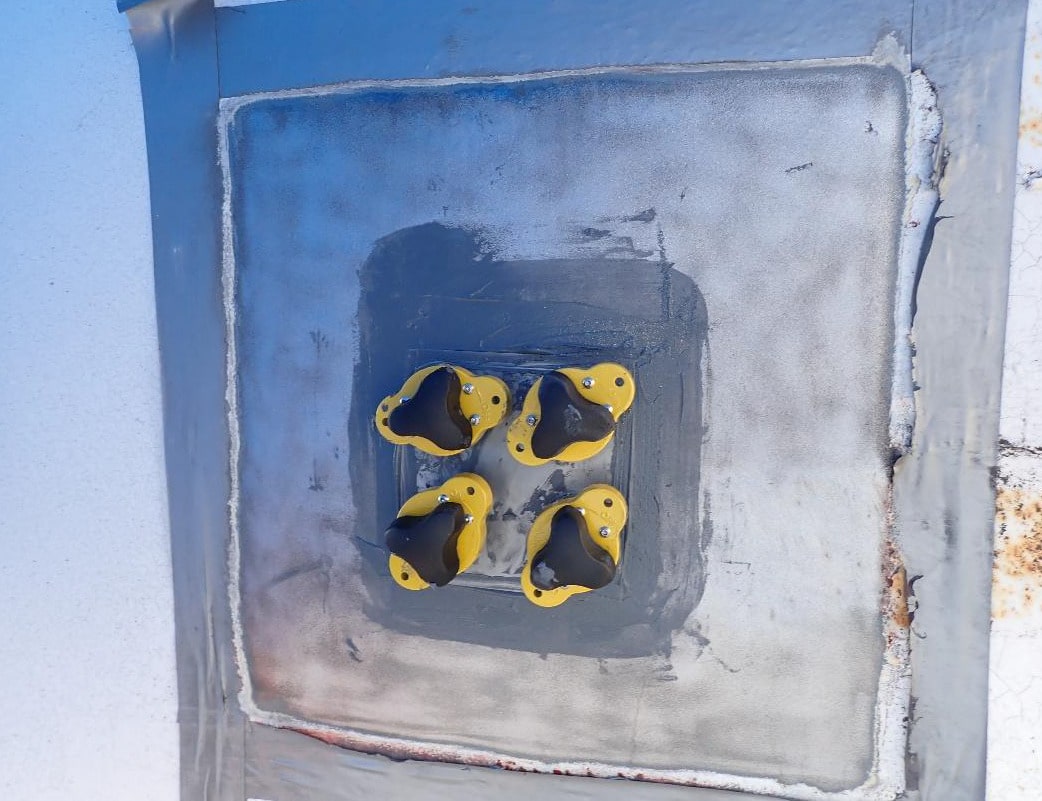
- Filler & steel plate application: A thick layer of 3X filler was applied to level the surface and smooth any irregular edges between the solution and the tank side wall. A pre-treated steel plate, also prepared with the Bristle Blaster®, was coated with 3X filler and positioned over the leaking area using magnets.
- Resin application: Once the filler was fully cured, a layer of 3X epoxy resin was applied to the surface. This ensured proper wetting and impregnation of the Kevlar® reinforcement layers.
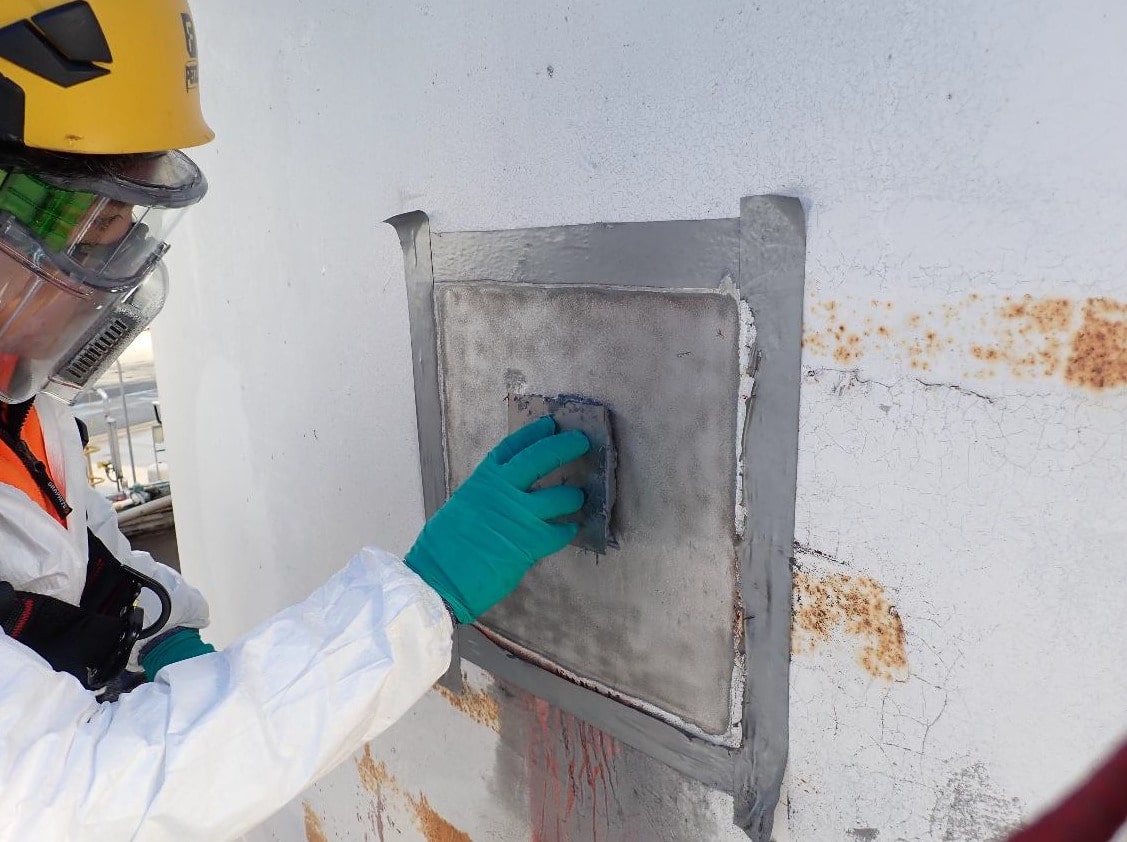
- Kevlar® patch installation (5 layers 300mmx300mm): The first Kevlar® patch, pre-impregnated with epoxy resin on both sides, was applied directly over the defect. Four additional patches were then applied in the same manner, ensuring perfect alignment and overlap to build up a five-layer composite structure.
- Finalization of the repair: A final layer of epoxy resin was applied over the entire repair area for protection. An identification plate was added for traceability. Finally, a rigid cover plate was installed and held in place using magnets to compress the system and keep the position throughout the full curing process.